The Faculty
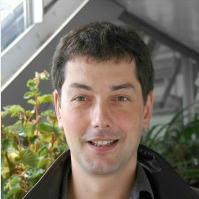
Dr Mark Goldie
Chair of the Faculty of History
Reader in British Intellectual History
Cambridge CB3 0DS
Websites:
Biography:
Mark Goldie took his BA from Sussex University and his PhD from Cambridge. After a research fellowship at Caius College, he joined Churchill as College Lecturer and Director of Studies, and latterly as a University Lecturer and Reader. He has been an editor of The Historical Journal and Vice-Master of his College. A member of two of the Faculty’s Subject Groups, he shares his teaching between Early Modern British History and the History of Political Thought.
Subject groups/Research projects
- Early Modern History:
-
Early modern British history
- Political Thought And Intellectual History:
Departments and Institutes
- Churchill College:
- Fellow
Research Supervision
Mark Goldie has supervised twenty-six PhD students, fifteen of whom became university postholders, twelve publishing their theses as books. Former students include David Allan, Justin Champion, John Coffey, Natasha Glaisyer, Tim Harris, Sarah Irving, Clare Jackson, Geoff Kemp, Jacqueline Rose, Sami Savonius, Hannah Smith, Warren Johnston. Mark also teaches for the M Phils in Early Modern History, and Political Thought and Intellectual History.
Teaching
Lectures and supervises in Political Thought from Plato to Locke; and Early Modern British Political and Religious History. Currently teaches a third-year Special Subject on Locke.
Other Professional Activities
The Roger Morrice Entring Book Project 
Introducing the Morrice Project
The Morrice Project was created to publish Roger Morrice's Entring Book, the most important hitherto unpublished record of British political and religious history of the second half of the seventeenth century. The fragile, three volume, 1500 page manuscript of Roger Morrice's Entring Book is in Dr Williams's Library, 14 Gordon Square, London, the pre-eminent research library of English Protestant Dissent. The Entring Book is 900,000 words long and covers the years 1677 to 1691.
The Entring Book and its author
The Entring Book is a key resource for British history during the later seventeenth century. Its author, Roger Morrice (1628-1702), was a puritan minister turned political journalist and agent for senior Whig politicians. He was astonishingly well connected and well informed, a discreet go-between, a conduit of public business, and a barometer of public opinion. Morrice was passionately committed to the defeat of absolutism in government and intolerance in the church. The Entring Book is not a personal diary but a chronicle of public affairs. It sets out to record the odyssey of a godly people - and of a class of parliamentary magnates - in the face of 'popery and arbitrary power'. Through it we can trace the transformation of puritanism into Whiggery and Dissent.
The Scope of the Entring Book
The Entring Book is a rich source for much else besides. It touches upon many aspects of Restoration society: its social structure, urban growth, institutions and personalities, theatre, the royal court, the judges' courts, military and colonial affairs, foreign relations, London commerce, parish, ward and livery company politics, worship, piety and blasphemy, the culture of anti-popery, the governance of Scotland and Ireland, and the flow of news across Continental Europe.

- Morrice's index to the Entring Book
It is informative about printing, bookselling, and the promotion and control of the press. It provides an intricate account of the fabric of metropolitan life, its topography and social geography. It offers closely observed accounts of spectacle, ceremonial, drama, music, celebration, riot and demonstration. There are comments on plays, fireworks, masquerades, fires, the weather, duels, executions, and suicides.
Publication
In 2007 the Entring Book was published in six volumes, including a companion volume and a biographical dictionary. A seventh, Index volume appeared in 2009. See www.boydell.co.uk.
| Vol. 1 | Roger Morrice and the Puritan Whigs Dr Mark Goldie, University of Cambridge Contact: mag1010@cam.ac.uk |
| Vol. 2 | The Reign of Charles II, 1677-1685 Professor John Spurr, University of Wales, Swansea Contact: j.spurr@swansea.ac.uk |
| Vol. 3 | The Reign of James II, 1685-1687 Professor Tim Harris, Brown University, Providence, Rhode Island Contact: tim_harris@brown.edu |
| Vol. 4 | The Reign of James II, 1687-1689 Professor Stephen Taylor, University of Reading Contact: s.j.c.taylor@reading.ac.uk |
| Vol. 5 | The Reign of William III, 1689-1691 Professor Mark Knights, University of Warwick Contact: m.j.knights@warwick.ac.uk |
| Vol. 6 | Biographical Dictionary and Glossary Dr Jason McElligott, Merton College, Oxford Contact: jason.mcelligott@merton.ox.ac.uk |
The team included Dr Frances Henderson, an expert in seventeenth-century shorthand, who decoded those parts of the text written in cipher. Dr Henderson previously worked on the shorthand papers of William Clarke, the secretary of the New Model Army during the English Revolution.
The Morrice Board also included:
Dr Clyve Jones, Institute of Historical Research, London
Professor John Morrill, University of Cambridge
Dr David Wykes, Dr Williams's Library, London
Key Publications
- Co-editor, The Politics of Religion in Restoration England (1990)
- Co-editor, The Cambridge History of Political Thought, 1450-1700 (1991)
- Editor, John Locke: Two Treatises of Government (1993)
- Editor, John Locke: Political Essays (1997) Editor, The Reception of Locke’s Politics (6 vols., 1999)
- Editor, John Locke: Selected Correspondence (2002).
- Co-editor, The Cambridge History of Eighteenth-Century Political Thought (2006)
- Co-editor, The Entring Book of Roger Morrice, 1677-1691 (6 vols., 2007)
- Author, Roger Morrice and the Puritan Whigs (2007, Vol. 1 of the preceding)
- Co-editor, Censorship of the Press, 1580-1720, Vol. 4 (2009)
- Editor, John Locke: A Letter Concerning Toleration and Other Writings (2010)
- ‘The Roots of True Whiggism, 1688-1694', History of Political Thought, 1 (1980)
- ‘John Locke and Anglican Royalism’, Political Studies, 31 (1983)
- ‘The Scottish Catholic Enlightenment’, Journal of British Studies, 30 (1991)
- ‘The Theory of Religious Intolerance in Restoration England’, in O. P. Grell, et al., eds., From Persecution to Toleration (1991)
- ‘The Reception of Hobbes’, in J. H. Burns and M. Goldie, eds., The Cambridge History of Political Thought, 1450-1700 (1991)
- ‘Priestcraft and the Birth of Whiggism’, in N. Phillipson and Q. Skinner, eds., Political Discourse in Early Modern Britain (1993)
- ‘Politics and the Restoration Parish’, English Historical Review, 103 (1994)
- ‘J. N. Figgis and the History of Political Thought in Cambridge’, in R. Mason, ed., Cambridge Minds (1994)
- ‘Divergence and Union: Scotland and England, 1660-1707', in B. Bradshaw and J. Morrill, eds., The British Problem, 1534-1707 (1996)
- ‘The Hilton Gang and the Purge of London in the 1680s’, in H. Nenner, ed., Politics and the Political Imagination in Later Stuart Britain (1998)
- ‘The Unacknowledged Republic: Officeholding in Early Modern England’, in T. Harris, ed., The Politics of the Excluded, 1500-1850 (2001)
- ‘The Context of the Foundations’, in A. Brett, et al., eds., Rethinking the Foundations of Modern Political Thought (2006)
- ‘Mary Astell and John Locke’, in W. Kolbrener and M. Michelson, eds., Mary Astell: Reason, Gender, Faith (2007)
- ‘Roger L’Estrange’s Observator and the Exorcism of the Plot’, in A. Dunan-Page and B. Lynch, eds., Roger L’Estrange and the Making of Restoration Culture(2008)
- ‘Fifty Years of the Historical Journal’, Historical Journal, 51 (2008)
- ‘Alexander Geddes at the Limits of the Catholic Enlightenment’, Historical Journal, 53 (2010)
- ‘Annual Parliaments and Aristocratic Whiggism’, in J. Spurr, ed., The First Earl of Shaftesbury (2010)
- ‘The Life of Locke’, in S. Savonius et al., eds., Encyclopedia of Locke and his Times (2010)
- ‘Absolutism’, in G. Klosko, ed., The Oxford Handbook of the History of Political Thought (2010)
- ‘Situating Swift’s Politics in 1701', in C. Rawson, ed., Politics and Literature in England and Ireland in the Age of Swift (2010)
- Corbusier Comes to Cambridge: Post-War Architecture and the Competition to Build Churchill College (booklet, 2007)
- Churchill College Cambridge: The Guide (booklet, 2009)
Other Publications
Editorships
- General editor, The Roger Morrice Entring Book Project, 1996-2006
- Co-editor, The Historical Journal, 1997-2001
- Editorial Board, The Historical Journal
- Editorial Board, History of Political Thought
- Editorial Board, Eighteenth-Century Thought
- Editorial Board, Clarendon Edition of the Works of John Locke
- Advisory Board, Cambridge Edition of the Works of Jonathan Swift
- Advisory Board, Dr Williams’s Centre for Dissenting Studies